Sunday, September 18, 2022

Late 90s Langhe Ripe pu erh


Gather round and admire this old 97 loose Langhe ripe pu erh. 

You will realise there is nothing extraordinary by just looking at the tea leaves. You have to simply brew the tea leaves to appreciate the taste and aroma of an old pu erh.  Such tea would not appeal to some pu erh collectors where the tea is treated as a stamp or butterfly collection. There is no fancy wrapper, brand or vintage on the tea. It is difficult to show off this tea.  I had to use a couple of larger containers to store this pu erh as well. 

Back to this tea. This 25 year old ripe pu erh has a earthly and mellow flavours. The scent reminded me of an old used book store with antique wood flooring and cupboards. Smooth and mellow made this tea as a perfect non alcoholic after dinner drink. I even enjoyed drinking late infusions (10th -15th infusions) where the tea continue to exhibit a light woody herbal sweetness. Old Langhe ripe puerh are well known among ripe puerh tea drinkers in that Langhe factory employed longer fermentation times for ripe pu erh processing. I was told such older cakes was allowed to ferment more than 45 days to as much as 60 days under ripe pu erh processing when the tea was made.   

Such old loose ripe tea are to me inexpensive when compared to similar old pu erh cakes (raw or ripe). The only set back is that you may need a bigger container and storage space when you buy this tea in a larger quantity. 


Sunday, September 4, 2022

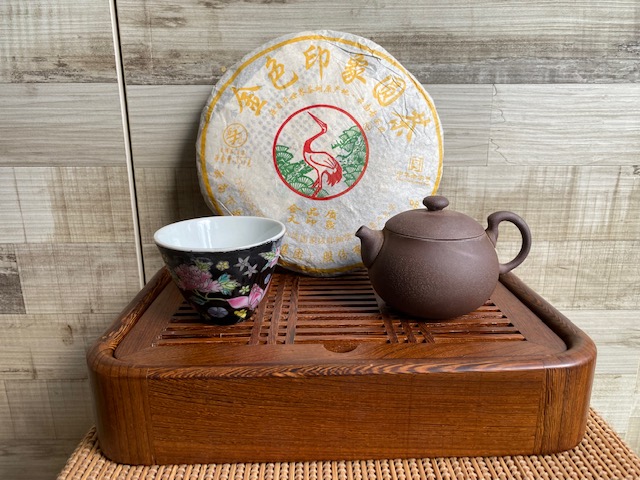
2011 Xiaguan Gold Impression Cake


There was a time around 2010-2012 where there were cakes that used older maocha in making the cake.  Many major tea factories got on the bandwagon and offered pu erh tea that had a few years of age in the tea. This meant that these factories had pu erh tea leaves sitting in their warehouses for a few years and are now pressing these older stock into cakes or bricks and made them for sale.  This would appeal to some buyers as this tea would not be considered as 'new' tea and is more ready to drink. 

This 2011 Xiaguan cake used 6 year old pu erh material in the production of this tea. 

I opened this cake earlier last month and had a number of tea sessions with this cake.  There is some age in the cake with good aroma and taste. There is an old-ish taste something like a few pu erh cakes that I had bought in Hong Kong.  Those Hong Kong cakes had initially had been stored in a more humid condition and the cakes were subsequently dry stored. I do enjoy drinking such puerh as it gave an impression of very old pu erh tea. 

Back to this cake. The famous Hong Kong tea expert called Cloud has a blog (mainly in Chinese)....there were comments suggesting (translated from Chinese), that this 'tea had been quickly fermented  (whether accidental of artificially) which will affect the subsequent aging endurance of the tea'   (www.cloudsteacollection.com).  This is different from my thinking as I had assumed that the tea was stored in much more humid climate (I believe at the maocha stage), that the tea has this unique taste.      

I can guessed some pu erh tea drinkers would like while some drinkers would not like this tea. 

An interesting cake. I recommend you try this tea yourself if you can get your hands on a cake.  

Monday, August 15, 2022

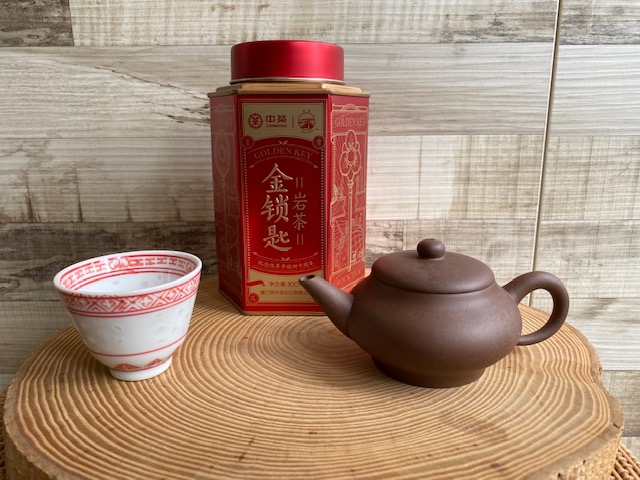
Golden Key Oolong


This is Golden Key oolong.  Oolong produced in Fujian, Xiamen have names given by a tea village or town.  Such names are meant to give a uniqueness to their oolong produced there. You would know the popular oolong names like Shui Hsien, Tie Kuan Yin and Rougui. Other lesser known oolong names include thousand mile fragrance, Fo Shou (buddha palm) and half waist squat (I kid you not).

This Golden Key oolong (2018 production) I had purchased is from the famous Sea Dyke factory. Sea Dyke labelled this tea as Golden Key rock tea that suggested that this tea may had been harvested from the Wuyi mountain region. Packed and sold in a metal tin, the 100g of tea leaves are long and vibrant. 

When I brewed a session of this tea, initial aroma is very fragrant and perfumed like. Very pleasant. The roast is high and the aftertaste is pretty long lasting.  Good for 6 infusions before weakening.  This tea is less robust than Sea Dyke Lao Chong Shui Hsien (yellow tin).  

An inexpensive tea.  I would recommend you get a tin. 

Monday, August 1, 2022

Afternoon Tea At Fort Sanctuary


I had afternoon tea at Tea Sanctuary.   Tea Sanctuary is a tea shop in Singapore located in an upmarket mall at Esplanade (where indoor concerts are held).   Esplanade is our equivalent of Sydney Opera House, except that our building closely resembled a local thorny fruit called the durian. 

Tea Sanctuary only sells Wuyi oolong tea. There is no pu erh, no liu bao and no white tea. Only Wuyi rock tea.  Oolong grown in the mountainous region of Wuyi mountains are called rock tea due the terrain of the mountain there.  Tea Sanctuary labelled their tea as numbers instead of specific oolong names, like Shui Hsien or Rougui.  A 3 digit number is assigned to a tea. 

My wife and I visited the shop yesterday afternoon and had a session of one of their tea namely 528. One of the directors who was manning the shop, Miss Lau Hui Zin, did the brewing the tea for us. She poured out 8g of 528 into a gaiwan and proceeded to brew the tea for us. She had quick hands in brewing the tea.  She used a fairness cup (gong dao bei) pouring 2 infusions in the fairness cup before serving the tea to us. This meant a round of tea would comprised of 2 infusions.  She explained the shop used only distilled water, porcelain gaiwan and cups so as the tea presented was simple and a customer can replicate this brewing method easily at home as well. Happy to say she used close-to boiling water as well. Before I forget, we were served a cup of chilled oolong before the actual tea to 'clean our palate'.  Miss Lau was very meticulous in her service, brewing up the next infusion only after we had only finished our cup of tea. 

The tea 528 was described by the shop as 'This fragrant tea expresses the prestigious terroir of Wuyishan with a powerful demonstration of intensity, rich and deep flavours, luxuriously smooth and soft, seemingly everlasting and deliciously rich aftertaste, mouth watering and sweet'.  Miss Lau continued to explained to me that the company brought in the Wuyi tea from China and final roastings of the tea are done in Singapore before the tea is ready for sale. One interesting fact was that the company is continuously tweaking their tea (in terms of roasting and resting) so that when you do a repeat purchase of a tea say the 528,  the tea may be slightly different as the company is trying to improve the tea itself. 

How did I find the tea? The early infusions of the tea was very good. This high roasted tea was aromatic. Quite a long pleasant aftertaste. The taste was robust with good minerals in the tea. I felt the tea did weakened after the 6th infusion. There was a slight sourness (later infusions) in the tea and it was more evident when the tea was cooler. This 528 tea was not the shop's top shelf tea and there were more expensive tea in their offerings.  The 528 tea is being sold in an box of 6 packets, 8g per pack, for $63 per box.   Miss Lau told me the shop will be offering some aged oolong nearer the end of the year.  I will be looking forward to have a session of that aged tea. 

Having a tea session (12 infusions) cost me $31 (US$22). This tea session was more suited for 2 people so I recommend you bring a friend with you when you have your tea there.  


Wednesday, July 20, 2022

2006 Langhe 8539 Raw Pu erh


This 2006 Langhe raw pu erh cake has been stored in Singapore for almost 16 years.   

I had a tea session of this tea last weekend. There was strong Chinese herbal soup flavours in the tea. It was like having a bowl of Chinese herbal chicken soup. Lots of Chinese herb taste and aroma with every sip. I thought I tasted some ginseng as well. There was also a strong woody profile in the tea. The wood is like aromatic wood that gave the sensation of a smoky flavour. The oaky finish resembled old Scottish whisky where the oak barrels had 'infused' the drink with a wood scent. Somehow this 'marriage' of wood and herbs worked very nicely in this tea. With a mouth watering aftertaste, this tea made for a nice tea session. 

When brewing pu erh tea, the flavours of the tea would be more vibrant if one use boiling water for every infusion. I had been to a few tea shops and even watch some tea reviews online where hot water was used to brew tea (that the heat was off for more than 1-2 minutes). There is a clear difference in taste and aroma when 'cooler' water was used. Don't waste your tea. Use boiling water for every infusion.   


Monday, July 11, 2022

Kamjove Art Tea Cup - Stainless Steel Version


I had bought another Kamjove tea infuser kit.  The last one was bought many years ago and I remembered it was a fun experience using it. 

This is the stainless steel version. Model no - TO650. 650ml capacity. The plastic tea infuser is twisted onto the steel mug. Everthing else work the same way. Drop some tea leaves into the infuser and add hot water.  Wait.  Press the top button to release the valve and the tea flows down into the bottom of the steel mug. Pour out to enjoy the tea and you are ready for your 2nd infusion. 

Compared to using a gaiwan or teapot, cleaning out the tea leaves after a tea session takes a bit more water and time to clean out the tea infuser.  I had comments from readers the last time, that the built in filter will stain over time. A reader buddy told me a simple solution is to soak the infuser in a bowl of water and throw in a denture cleaning tablet into the bowl overnight.....and the stains would be removed. It is a safe method though it sounded a bit yucky.  

Overall, this Kamjove tea infuser kit is still fun to use,  If you are a serious pu erh and oolong tea drinker, you will be surprised and pleased with the infused tea made by Kamjove tea infusers. It also make a nice conversation piece when you use it in a tea session with your friends. 

I had purchased with the intention of bringing this tea infuser for long overseas trip next year.  I am still of 2 minds and I may take a teapot with me instead. 

Wednesday, June 29, 2022

Some feedback on pu erh tea storage


I received a feedback on my tea storage. 

He is coincidentally a fellow local.   He claimed and believed that my tea storage is considered wet storage. Singapore has a climate which is hot and humid throughout a year.  As I did not take special steps to reduce the exposure of my tea to this hot and humid climate, my tea is not 'dry stored'.  This reader stored his tea this way - plastic cling wrapped his paper wrapped tea, then placed in a zip lock bag and a pack of drying agent is inserted to this bag and the tea is kept away in a cardboard box.  This seem to suggest that the reader is 'minimising' his tea to humidity and airflow.  

Here are my 2 cents of thoughts:

1.  I do not expose my pu erh tea directly to the Singapore climate. I do not bring out my tea to my yard and expose them directly to the weather of Singapore.

2.  I keep my tea in their original tongs (whether bamboo or paper) in a pu erh box. I keep all my tea in 2 empty bedrooms just for tea storage.  Windows are closed and curtains drawn. I do nothing else.  I let time do its work. The rooms are clean and dry. I considered my storage as dry stored but in a climate outside that is hot and humid. My tea had been stored under these conditions for more than 10 years.  

3.  Traditional Hong Kong tea shops used to store their tea within the shops (pre war shop houses) in the past. They might have a basement where the tea is kept. The storage conditions there would be slightly more humid and a seasoned tea drinker can actually discern the humidity within the tea when the tea is brewed. Today, such tea storage are non existent in Hong Kong and the pu erh tea are now kept in clean dry rooms. I happened to have a few older pu erh tea that was slightly exposed to the old style humidity but was later stored in drier conditions during the later part of the tea storage. I enjoyed such tea and they have a pleasant distinct aroma and taste in the tea. 

4.  Taiwan tea shops sells old pu erh. Most of these old tea were purchased from Singapore, Malaysia and Hong Kong and were resold in Taiwan. It is not surprising that the older pu er found in Taiwan has taste and aroma characteristics of Malaysia and Hong Kong. 

Pu erh tea stored in Malaysia, Hong Kong, Guangzhou, Kunming will have its own storage's taste and aroma. I bring my tea tea every time to these places and have tea with my tea buddies from these countries. Yes, I have loyal tea drinkers that believe their country's storage is best and would regard other countries' storage as less than ideal. However,  they would have a different opinion when they do a blind taste taste. 

I am not saying a particular country has a better or best storage. Every country storage is unique.  Tea drinkers should enjoy and appreciate the various storage conditions of pu erh from different regions. It is an adventure in every cup.