Tuesday, May 18, 2021

2004 6 Famous Mountain Silver Bud Tuo


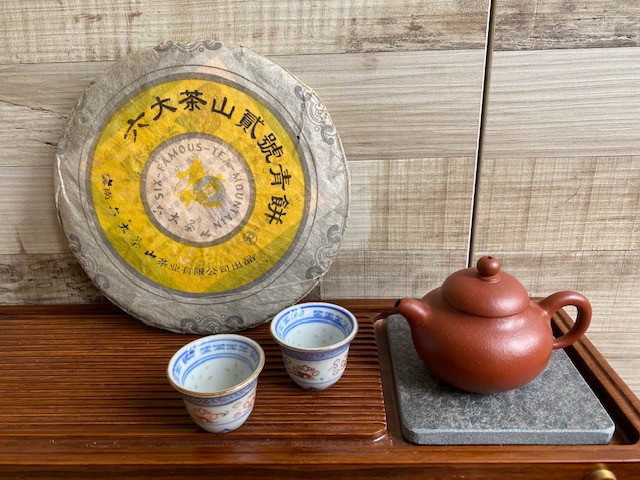
I had blogged about a 2004 6 Famous Mountain tea cake last month. This was a mellow and aged tea with lightest hint of smoke.  

Today's blog post is a tuo, also a 6 Famous Mountain production.  This is a 2004 vintage and is 100g in weight.  This raw pu erh tuo is composed of silver buds.  'Silver buds' is a term used by the pu erh industry to describe the use of very young pu erh leaves in the production of pu erh tea.   It would also suggest that the harvesting of these silver buds would be slightly more labour intensive, which in turn would explain for the slightly higher prices of 'silver bud' pu erh tea.

I am no expert in silver bud pu erh tea. This tuo's taste and aroma has a unique dried sweet berry taste and aroma with  light notes of freshly baked pastries.  Long and sweet aftertaste.  Quite addictive in that I finished the entire tuo in about a month. 

An Interesting tea. 

Monday, May 3, 2021

Drainage Hole


I bought another tea tray.  Actually, Chinese tea drinkers would tell you you only need one tray.    This new acquisition  is visually quite unique. You see a stone tray to place your teapot and quite a wide space to position a few teacups and even a fairness cup. You will also notice, on the side of the tray where the teapot is, a knob like thing that is sticking out from the tray.  This is the drainage hole.

This drainage hole is where all the tea waste water will 'exit' when waste water is poured onto the tea tray.  I was supplied with quite a long plastic hose where I need to attached one end of the hose to the drainage hole and having the other end of the hose directed to a container or pail at the bottom leg of the table.  Users even use cable-tie to secure the hose to a leg of a table.  

You will often see such set up In a tea shop where Chinese tea is brewed all day long and the amount of tea waste water may be quite substantial. 

If you are brewing tea at home, you may not need to have a 'hose to pail' set up.  Reasons being that if you are brewing tea yourself, the amount of waste water may be minimal and you are better off using a tea waste bowl instead.  There are some teashops I had visited that do not use such set up either. They used a tea waste bowl, and are more deliberate in their tea brewing (more careful with less spills). They employ a tea towel to wipe off any water that is spilled onto the tea tray.   

I noticed there are now, very pretty tea waste bowls and they can even make nice conversation pieces when you are brewing tea with friends. 

I am interested to know to see my readers' tea brewing set up.  Do send pix to me and I will have a page to show off your setups.  

Tuesday, April 20, 2021

Tea For The Special Occasion


Do you keep aside some tea for a special occasion? It could be a tea you especially like and this tea is now too expensive, hard to get or simply no longer available.

Many people celebrate milestones in their lives; like a birthday, graduation or buying a new house.....by eating or drinking something special.  It is common to see people popping a bottle of bubbly or having a party to celebrate such occasions.  

I keep some tea I liked for such occasions.  I would make a brew of these tea.  I do not consider these tea to be top grade or expensive tea  but I had purchased them some years ago and drinking these tea make me happy.  You will notice its not much tea.....I will simply replace them with some other tea when I have finished with this batch of special occasion tea. For me tea is meant to be appreciated and drank and not kept as a butterfly collection.   

Sunday, April 4, 2021

What A Difference 17 Years Make


As I turned on my Spotify to listen to 'What a difference a day makes' by Dinah Washington and at the same time typing out this blog entry (that's multitasking for me), I am drinking a 17 year old 6 famous mountain raw pu erh.

17 years of storage is quite a long time.  Things were quite different ....... we were younger and I believed things were more simple.  This raw cake was produced in 2004 by an old factory called 6 famous mountains. Located in the Menghai region of Yunnan, this factory is a well known among pu erh tea drinkers. 

I remember having a sample of this tea many years back and it did not leave any buying impression to me.  I found this tea again in Singapore and the sampling session this time was a treat.  With 17 years of storage under its belt, this tea is simply smooth, mellow and sweet.  There are complications in taste and aroma that is only achieved through very long term storage.  Herbal, spicy, Chinese medicinal and dried floral notes with an ever so slightly lingering whiff of smoke.  Quietly intoxicating.  I find myself finishing a session of this tea very quickly. 

What a difference 17 years make.   


Monday, March 15, 2021

Aluminium Tea Trays


There are Chinese tea drinkers I know that do not like aluminium tea trays.  It is either you like it or you don't. Negative comments include 'it is so metallic' (yes, aluminium is metallic), 'its so shiny', 'wood trays are more classy and traditional' to 'its too cheap looking'.  

I happen to use and own one round aluminium tea tray that I use weekly when I brew tea in the kitchen.....and I had been using it for almost 10 years. I had no issues with it except now that the tea stains are now quite difficult to remove. 

As you can see from the pix, I had actually lined the replacements for my current aluminium tea tray in the event it broke (which is unlikely). I got myself a similar round one and a rectangular version. Both lids are removable and are easy to maintain. They can be washed with detergent can easily be kept away. 

I have to agree that the wood and stone tea trays are visually more attractive. Wooden ones may have a limited life span as the wood joints may deteriorate after long contact with water. The hardier stone trays may be a hassle to stow away especially if you need the tea brewing space for other activities. 

You can even dispense with the use of a tea tray.  All you need is a bigger tea waste bowl and careful pouring of your water and you can have a happy tea session without a tea tray. 

Tea trays are not expensive and one tray would last you quite a long time. Are you using one?

Wednesday, March 3, 2021

How Do I Brew My Oolong ?


When I have an oolong session at home (usually alone), I will literally brew up 5 infusions; one brew a cup.  I might brew up a few more infusions when I had finished drinking the 1st 5 cups.

It is, to me, an easy way to enjoy my tea.  When I am reading or working on my laptop, having a few cups of tea beside me is a good  idea.....it keeps me seated than making one infusion at a time. I do drink the tea fast, about 15-20 minutes. An oolong, like the one in the pix is generally good for about 5-6 infusions before the tea weaken in a hurry.

It is quite similar for pu erh tea.  I brew 5-6 cups at a go, one infusion per cup and repeat this brew for the next 6-12 cups.  It is quite difficult to drink so much tea alone, so I do sometimes keep the later infusions in a vacuum flask where I can enjoy the tea later or when I am out for errands.  

When I am in Guangzhou buying tea, I do ask for a small sample (after I had tried the tea in the shop) on those tea I am interested in and I brew the tea back in the hotel room.  It is not easy to assess the tea in a room but it helps me a little before I make a buying decision.  I do bring along a flask during my travels and get the tea shop to pour a couple of infusions into the flask so I can continue to 'drink' the tea I had shortlisted to buy.  

Readers will know me that I do not describe a tea by each and every infusions but rather by initial and ending thoughts.  I enjoy the complications of a tea, the aging results of storage and the pleasant sensations after finishing a tea session. 

Time for tea.  

Tuesday, February 23, 2021

Some Thoughts On Oolong storage


Storing your oolong would primarily depend on the roast levels of your oolong.  


1.  Lightly roasted oolong.  Some examples are Taiwan high mountain oolongs like Ali Shan oolong. I had also tried a very high grade (aka expensive ) Tie Kuan Yin from China which is also lightly roasted.  I liked these teas.  It has a refreshing quality, a nice bouquet of fresh flower aroma with a light lingering sweetness in the aftertaste.  

These tea are not meant for aging and need special attention in storing these tea.  Refrigeration is a commonly used to keep these tea.  I suspect the tea leaves may be placed in the freezer.  I had seen, when I was in the Guangzhou tea wholesale centres where high grade Long Qing tea was also kept in deep freezers to maintain the freshness of the tea.  

2.  Medium to high roasted oolong.  I recommend you store them in tea caddies.  The popular tinned versions are, to me, very nice oolongs and I keep them in their factory packed tins. Most of these tins are double lidded.  It is reasonable air tight. Many of these teas do well with age. They do not ferment like pu erh tea, rather oolong oxidised with time. Old high roasted oolong are very highly sought and are very expensive. Even the older canned versions can cost more than $100 per tin.

3. Specialty oolongs.  One of my fav specialty oolongs comes from Hong Kong. Its their 40-hr high roast oolong. The tea taste and aroma is a surprising caramel like. A super tea in my opinion. However, this tea is meant to be drank within a year as the roasted aroma will diminish significantly after a year.  Its a drink now tea.  In spite of its shorter life span, this is a popular tea among many oolong tea drinkers worldwide. I look forward to going to Hong Kong again to purchase this tea. I may consider freezing some of this tea when I return.