Monday, September 12, 2011

The state of mooncakes and chinese tea


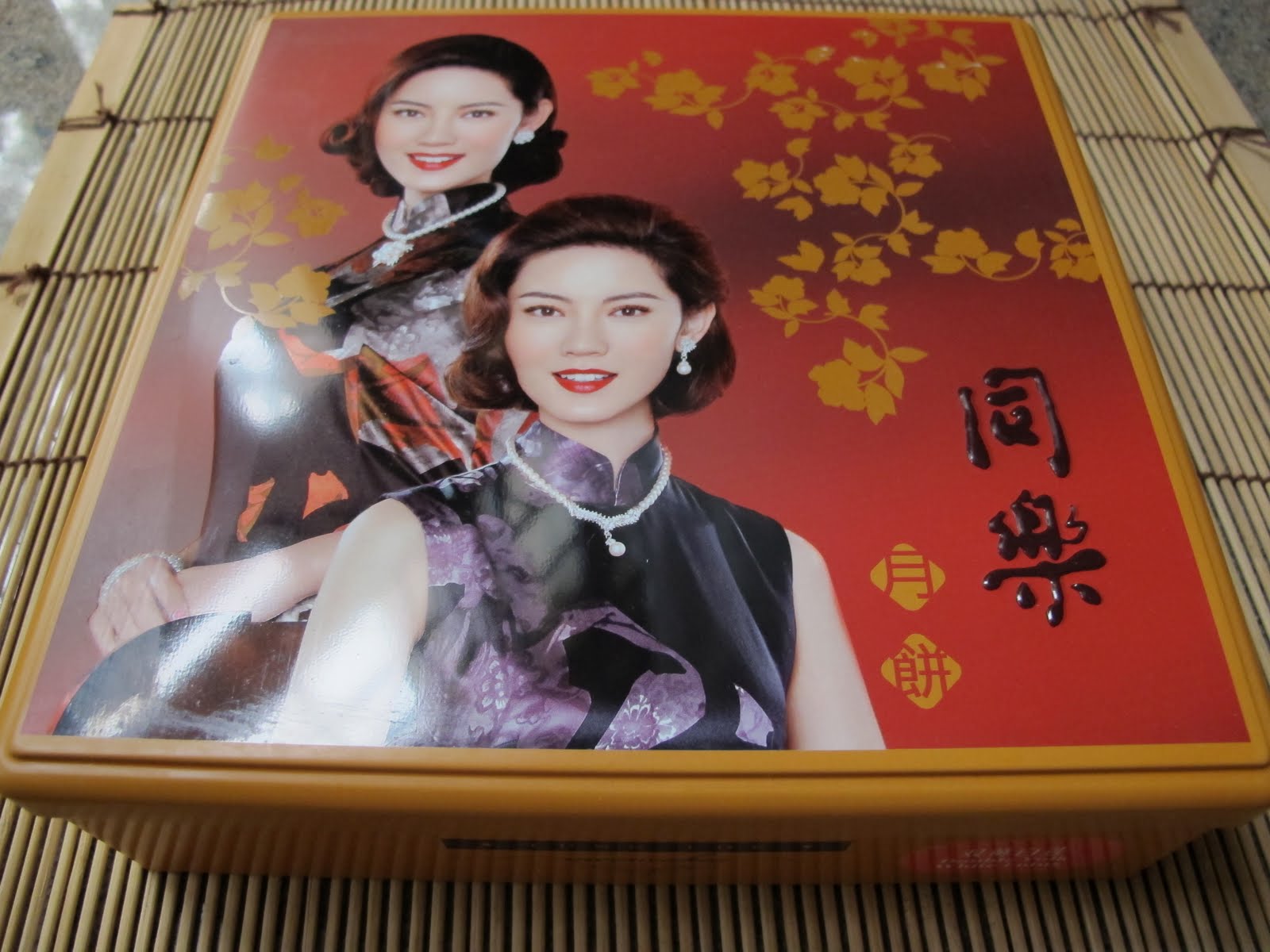
Today is the mid autumn festival. In Singapore, this festival is mainly celebrated by the eating of mooncakes and children carrying lanterns in the evenings. In the weekend newspaper, there was an article on mooncakes (click pix 1 for enlarged view). I noticed that the prices of these delicious sweet pastries have gone up substantially over these 3 years since I started this tea blog. It used to be $30 for 4 cakes.....now its close to $45-50. Yes, ingredients to make the cakes are now more expensive, but it is pretty obvious that the use of elaborate and intricate packaging had made the prices of these cakes over the moon. Looking at the above pix, you see mooncakes being packed in a chinese lantern, pix of celebrities on the box of one, and artistic designs in pix 2/3. Its difficult to make an argument, that such elaborate packaging is a waste, if the bottom line shows good profit for the mooncake bakeries.

Anyway, I had also noticed that people here in Singapore are warming up to the use of using the internet when shopping. My wife used Groupon, to purchased a box of mooncakes (pix2) which gave some savings. I find that its quite useful especially when an item you need can yield some savings. Hold tight to your credit cards as impulsive buying may make a hole in your pocket.

The bigger Chinese tea factories have also introduced some elaborate marketing strategies especially these 2 years. You would have noticed that for pu erh tea, there is an increase in special edition cakes. You have the gold labels, tinned and special wrapper versions, anniversary and commemorative cakes. I like to point out that these pu erh cakes/bricks do sell well. Collectors 'chase' after these cakes as they deemed these cakes as investments. Some of these tea were also bought and kept as trophies in their living room. I suppose it makes the house more cultured (joke joke). Its interesting to note that buying to drink these tea is not considered during such a purchase. Just my 2 cents worth of thoughts.


Friday, September 2, 2011

2005 Ai Lao Shan Raw Pu erh 357g


Readers will know that I drink less raw pu erh compared to ripe pu. Reason being my stash of raw are relatively new about 5+yr old on the average. I found that new raw pu erh cakes though, perfectly fine to drink when new, does taste much better with aging and the taste is less harsh on the tongue (some people says it caused an upset tummy if they drank too much newer raw pu).

It was an article in a tea magazine, "Tea Art Magazine" (see blog 20 May 2011) that a review of some pu erh tea had the review panel confused over the oolong-like taste of the pu erh being sampled. In one of my tea purchases with Yunnan Sourcing, the proprietor Scott had included some samples of his in-house cakes and one of the samples was a 2009 "Ai Lao Jue Se". This was a 100% Ai Lao mountain pu erh tea. I made a brew of this tea and the results was, to me, a floral like scent with a nice flowery sweet finish. The brew had a light oolong tea characteristic. Most importantly, it did not had the harsh finish on my tongue which I had associated with new raw pu. Nice.

I did some homework and these are my findings. Most of the new raw pu erh that has a slightly harsher finish are those raw pu erh that is a blend of pu erh leaves. Pu erh tea that is not a blend but comes and harvested from a single area or region is called single estate pu erh. The taste of this brew tend to be more drinkable, more floral like in the aroma and more pleasant in terms of mouth feel. I would like to qualify the previous statement as I have only tasted less than 6 single estate teas so far, in my findings for this blog. Popular pu erh recipes 7542 and 8582 are examples of pu erh that is a blend of pu from different regions of Yunnan. My teafriend, auhckw in Malaysia told me that single estate pu erh can be more expensive compared to the popular blends and there is a following of tea drinkers that drink and store single estate tea in Malaysia.

When you buy your tea, whether single estate or blend - new or aged.......sample the tea and make a decision based on your preference. Will single estate or blends age better.....I cannot tell you which tea would be better but can assure you with proper storage your pu erh will develop its own unique aged taste and aroma.

I found this 2005 cake at a local tea shop and from the wrapper, this stone pressed cake is from Ai Lao mountains. This tea has the same tea aroma and taste characteristics as the Ai Lao sample I mentioned earlier but it is more mellow overall - aftertaste stayed longer in the mouth. The tea did however gave me a sweaty sensation which lasted about a minute after drinking 2 teapots of this tea. A very interesting tea....quite refreshing actually.


Saturday, August 20, 2011

Chinese Tea - A Japanese Perspective


This well written article is by Aki Omuri, and is from the Daily Yomiuri Online 29 Jul 2011. Article as follows:

"Nowadays, many people are able to enjoy Chinese tea such as oolong and pu'er thanks to its availability in bottles or cans. By making the tea yourself, however, tea time can be a wonderful experience as you can better understand and appreciate the scent and rich taste of the tea.

According to Chinese tea expert Naoko Iwasaki, there are more than 1,000 kinds of Chinese tea, either from China or Taiwan. Iwasaki said Chinese tea is divided into six groups, including green, white and black, and is categorized by the level of fermentation, processing, the color of the leaves and other factors. Although the most common tea in China is green tea, the way it is prepared and enjoyed is different from that in Japan.

Iwasaki, a tea arts master certified by the Chinese government, has run CHAZENsodo, a salon to share the enjoyment of Chinese tea, in Shinagawa Ward, Tokyo, since 2004. She also is the director of the Japan Chinese Tea Culture Association.

For beginners she recommends Chinese oolong tea, the most well-known among blue teas with moderately fermented leaves. "Taiwan oolong tea, in particular, is aromatic and doesn't have any surprises," Iwasaki said. She said uniformly shaped dark green leaves are characteristic of good tea.

The joy of Chinese tea is found not only in the flavor but also in the scent and color. In the making of authentic Chinese tea, small, purpose-built tea cups and pots are used. "With them, you can completely enjoy the scents and flavors. Tea can also be prepared in ordinary, small teapots and sake cups," Iwasaki said.

In the art of making tea, the teapot and cups are first warmed by pouring hot water in them. Iwasaki says that after the water is poured out, about five grams, or two teaspoonfuls, of tea leaves should be put in the pot. The lid is then placed on the pot to let the leaves steam for a few minutes. When the lid is removed, a refreshing and crisp scent fills the air.

At this point, just enough hot water to cover the leaves is poured into the pot and then poured out after a short time. "You can drink it then if you want to, but the first batch of hot water is to make the leaves open," Iwasaki said. She advises that hot water be poured in again, and the tea is ready when about 70 percent of the leaves open. The hot tea in the pot should be poured into a separate container, called yuzamashi, before being served in cups. "You can enjoy the scent in the second serving, flavor in the third and a pleasant aftertaste in the fourth."

While taking in the beauty of the light green tea, you can enjoy the slightly sweet, mellow taste, Iwasaki says. After drying, a pleasant aroma will remain in the cup.

In Taiwan, a special slim cup is used to enjoy the tea's aroma. After the tea is made in the cup it is moved to another container and the aroma remains in the empty cup. I tried it with a cup that was once filled with oolong tea and I picked up the sweet, vanilla-like smell.

"While enjoying the color, scent or flavor, you can also delve further into the art by studying tea utensils or growing areas which may bring you closer to Chinese culture itself. The good thing about this particular aspect of the art is that there are few limits. It is up to you which leaves you use and how much time you spend to enjoy the tea," Iwasaki said."


Saturday, August 13, 2011

2005 Xinghai Ripe Pu Erh Cake


This is a 2005 Xinghai ripe pu erh cake, 357g. I had purchased it in a city teashop in Guangzhou.

Yunnan Sourcing's website gave a short description of Xinghai tea as follows : "The Xinghai tea factory is a medium size Pu-erh tea factory which is located in Menghai county of Xishuangbanna. The tea factory was opened in in June of 2002 with an initial investment of just 700,000 CNY. Boasting 80 workers and producing just 5 different pu-erhs in its first year of production. The boss of Xinghai tea factory, Zhang Jian Li (a woman) is a Menghai county native and worked at Menghai Tea Factory from 1994 to 1999 before striking out on her own to create her own Pu-erh teas. "

According to a teamaster there at Guangzhou, pre 2006 Xinghai, based on his knowledge, used the traditional method of fermenting ripe pu erh tea. This meant that the tea factory took almost 3 months to ferment the tea in their factory. This teamaster believed that current fermentation times for newer ripe pu erh are slightly shorter now.

The aroma from brewing this tea is that of freshly baked bread. The scent reminded me of the aroma of biting into a freshly baked bread roll. The tea is very smooth.....the tea slides down the throat easily, culminating into a nice sweet finish. A very enjoyable tea.

I recommend, for this tea, that you make a slightly stronger brew of this tea and/or extending the infusion times a wee bit. Its a pity I only bought a cake for myself in Guangzhou. Fortunately, I saw the same cake for sale in Qiu Xiang teashop in KL, Malaysia......bought another cake of course (below US$20).

Saturday, August 6, 2011

Sea Dyke - San Yin Shui Hsien


I had purchased this tin of 2007 Sea Dyke - San Yin Shui Hsien at the KL tea expo last June. (see 1 Jul blog). This tea was offered to visitors to the tea expo at a price of 15RM (about US$6).

This 100g shui hsien was advertised as a 2007 edition, though there were no markings on the tin to evidence this claim. Sea Dyke brand is famous for their production of Fujian oolongs and their Lao Chung Shui Hsien is one of the most popular tinned oolong tea (see blog 15 Oct 2010).

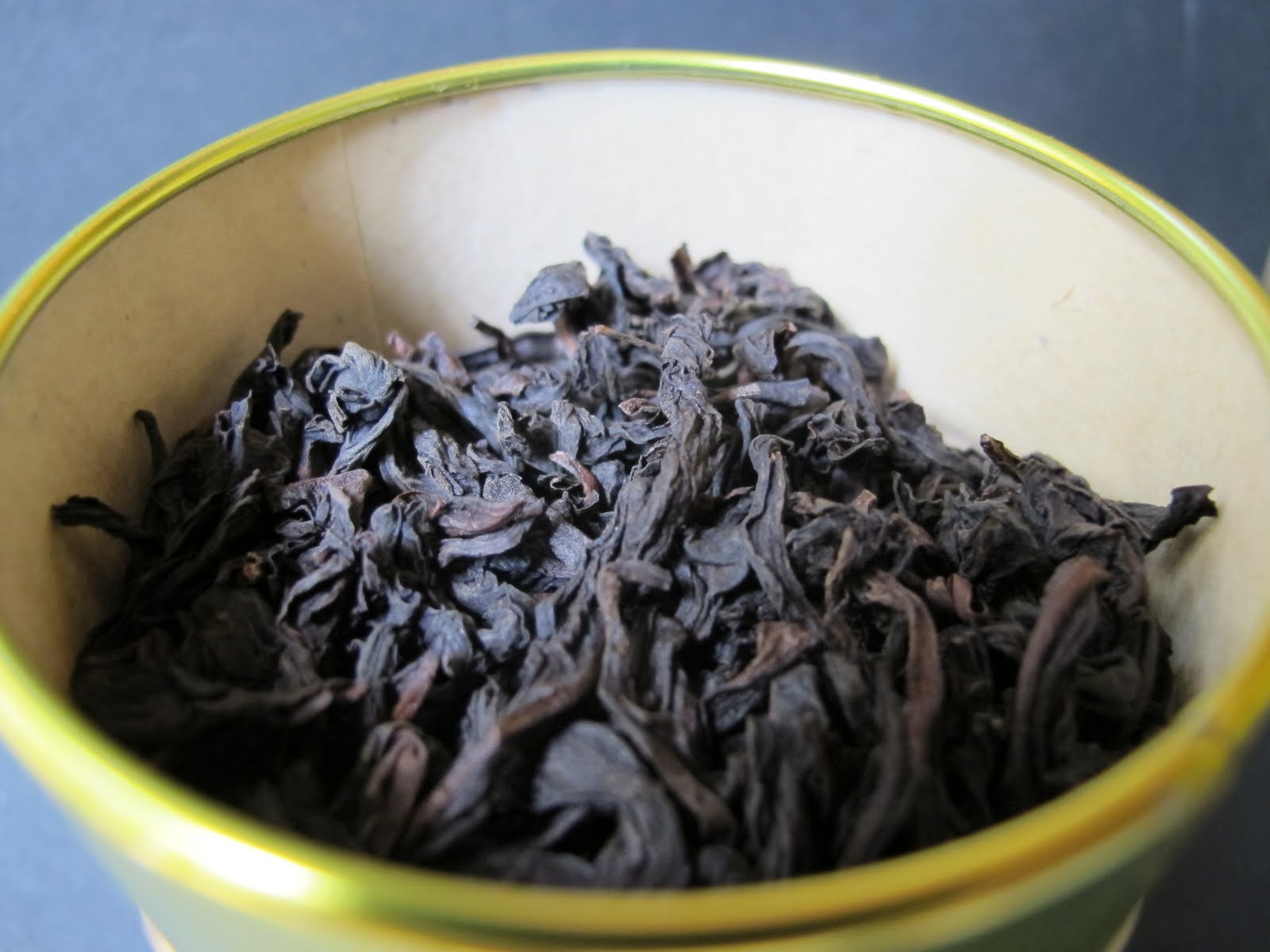
This tea can brew 5-6 infusions of oolong tea. Its has a nicely roasted, robust aroma with a sweetish aftertaste. . I myself prefer the other version (lao chong shui hsien) as I prefer a stronger and more robust scent and flavor - a personal preference.

I had found out that current editions (2010-11) of this san yin shui hsien sells below US$5 and in my opinion gives really good value for money. Comes in a nice metal tea caddy. Recommended.

Tuesday, August 2, 2011

Tea Tools


There are “tea tools” that one can use to help make an easier and comfortable brew. Pix 1 shows a common tea tool set which you see at tea sampling tables in a teashop. These tea tools can be made from wood, bamboo, plastic or even metal. The tweezer is commonly used to handle the teacups during the tea rinsing exercise. The tea leaf scoop need no explanation. Lastly, the sharp pointed needle tool is to (poke yourself for buying too much tea) help clear any tea leaves that may be stuck on the filter inside the teapot. I usually use this tool only when I am rinsing the teapot after use. This set comes with a funnel that you can place over the lid of the teapot when you pour the tea leaves into the pot with your scoop. Such tea tools set are usually inexpensive ($5) but can be pricey as well ($200+).

The last pix are tools to help you break or pry open a pu erh tea cakes. Pu erh cakes, bricks or tuos are normally compressed very tightly and using your bare hands to break the cake can be quite hazardous. You can use a regular metal letter opener or in my case a swiss army knife. I insert the knife into the cake, at the 12, 2,4,6,8,10 o’clock positions. I could then pry open the tea cake lengthwise and I end up with 2 pieces. It can now be broken by hand to smaller pieces to be stored in your tea box/caddy. It is important that you perform all these steps, I had mentioned, slowly. This would reduce the amount of tea dust resulting from opening the cake. I try not to keep and brew the tea dust as they tend to clog up the filter in the teapot and affects the pour-out of the tea.

There is also a tea pick in the last pix. Most teashops and tea drinkers commonly use this pick to pry open their teacakes. Knife or pick…..it a personal preference.

I would make a brew of the tea after breaking up the pu erh cake. I would, however, make subsequent brews a week later so as to ‘awake the tea leaves’ (see previous blog for my explanation).

Sunday, July 24, 2011

2007 Menghai Dayi 7572 ripe pu erh 357g


I had purchased this ripe pu erh cake during my visit to KL, Malaysia last month. I had purchased it from JDX tea distributor Sdn Bhd. JDX is an official Menghai Dayi (officially called 'Tae' now) distributor in Malaysia. I will write more about JDX in my later blogs.

This is the Menghai Dayi 7572 ripe cake. This is the 2007 (702) version. The '7572', which you see on the front cover of the wrapper (pix1) is the recipe name of the pu erh cake. Many popular pu erh cake uses a blend of pu erh tea leaves that are harvested from the various regions of Yunnan, China. Instead of giving a name to a blend of tea leaves, a 4 digit number is used. This is unlike wines where names like Merlot or Chardonnay are used to describe wine 'recipes'. There are many recipe numbers used in making pu erh cakes and some pu erh recipes like 7542 and 7581 are examples of popular pu erh cakes today.

Pu erh tea factories will make a number of batches of the same tea in a year. In this case, for a 2007 cake, the 1st production of a 7572 cake will be given an addition code - 701. The second production batch will be 702, which I had purchased. You can see the production batch number on the reverse of the wrapper (last pix) or in recent cakes; on the front of the wrapper itself. Is there a difference in the tea, lets say between 701 and 703? Yes, you can see the difference in the pricing of the tea. A 701 (1st production) will be more expensive than a 703 (3rd production). Tea collectors and speculators will tend to purchase the 1st production of the year (something like a 1st printing of a book). This cake is a 4 year old tea, and the prices for a 701 is almost 30-40% more than a 702. Is there a difference in the taste? I cannot tell you. I do not have the privilege to try the various production batches of a year. My tea friends, even in Guangzhou and Hong Kong, have no experience in this matter, although it is an urban legend that 1st production has better grade leaves than later productions. I will try to find out more though.

But I digress. There are sadly fake pu erh cakes being sold at tea markets and tea shops. I have gleaned some information about the fakes and I used the following visual checks to assist me in my purchase of Dayi cakes. Firstly, the wrapper fold should be something like in pix 2, where the final fold of the wrapper has printed information. Secondly, the security sticker should be clearly printed and you can feel the printing on the sticker. Thirdly, there should be 'Dayi' Chinese characters on the silver strips of the stickers. Finally, when you opened up the cake (usually at home, after you had purchased the cake), the inner label should have the silver strips with "Dayi" characters with a line of colored numbers running down vertically on each side of the inner label (pix 5). I know all these pointers I had mentioned are not complete or fool proof but I am currently using these pointers to assist me when I buy the slightly older Dayi cakes.

This 7572 cake which I had purchased, is tightly compressed and you need tools to break up your cake. It is important that you let this tea air out in your tea caddy for a couple of weeks before drinking the cake. This cake will be 'awaken' after a few weeks and the taste difference is much better than if you had brewed the tea leaves immediately after breaking a cake. Some tea drinkers had emailed me expressing their doubts about 'awaking the tea'. I only made this conclusion after drinking through more than 40 pu erh tea cakes. I may be wrong.....may be imagining things....

Back to this cake. The aroma is very pleasing. I can understand why this 7572 cake is very popular among the ripe pu erh tea drinkers. The scent seem to signal that the tea will be nice, sweet and pleasing. It has a subtle scent of nice chinese medicinal herbs as well. Overall, a nice fragrance and pleasing sweetish aftertaste. This tea brews fast and strong, so adjust the tea leaves and infusion times to your preference.

I have no regrets buying this 2007- 702 Dayi 7572 cake.