Saturday, December 2, 2023

Tea Of The Year 2023


I had written about tea for many years and I had not had a 'tea of the year' entry since I started. It would be fun to end this year with such a post. 

The tea, in my opinion, has to be good; have some age and for its price levels not break an arm and a leg to acquire such a tea.  These are simple parameters. Finding such a tea from an obscure tea factory would be an extra bonus as well. 

I present to you the tea; 2005 Shuang Xiong raw pu erh cake. 

This is a Yongde Shuang Xiong tea factory production. I could not find much information on the internet about this factory and it is possible that this factory had closed its operations. Yongde region is now well known for its pu erh tea harvested from nearby Bing Dao and Da Shue San (big snow mountain). These tea regions were not well known 20 years ago but now these pu erh tea are now commanding high prices in the Chinese tea markets.

This tea brews strong. The color of the tea and tea leaves when brewed was dark rusty amber. Initial aroma was like being in an old book or antique shop. The woody aroma and taste was like a whisky or wine that had the oaky aftertaste. The tea is smooth and rounded.  Mouthwatering and having a salivating sensation in the aftertaste. The almost 20 years of clean Malaysia storage was good. There is good mellowness and roundness in the tea. A strong complex tea and yet there is a soft and gentle side to the tea. Whenever I brew this tea, the tea session is short; finishing 6-8 infusions within a short time. Addictive.     

Friday, November 17, 2023

Japanese Gaiwan Variations


When it comes to brewing Chinese tea, one would normally use a teapot or gaiwan (the one in white in pix).  Add tea leaves and hot water into the gaiwan, hold up the gaiwan and tilt the cover a bit and proceed to dispense the tea. Tilting the gaiwan cover a bit will prevent the tea leaves from being poured out so you can continue to make further infusions of tea. 

Japanese also use a teapot and a variation of the gaiwan to brew their tea. There are 2 major variations; shiboridashi (bottom left) and the Hohin(right). The Shibo has no strainer but has grooves incorporated in the design. You need not tilt the cover to dispense the tea. This is less risky than the gaiwan, in my opinion as it might reduce any accidental slips or spillage of the tea. The Hohin is a spouted gaiwan with a built in strainer. This vessal is also easy to use. 

I enjoy using Japanese tea ware. They are more elaborated in terms of design and material. My Japanese tea ware collection are vintage pieces so I am more careful and deliberate in my tea brewing when I used them. Fun to use. 

Thursday, November 2, 2023

2007 Changtai Ripe Pu erh Cake


This is Changtai tea factory ripe tea cake. Produced in 2007, this cake was a special order made for a Taiwanese tea shop called Jing Mei Tang.

Changtai tea factory does special orders for their oversea clients. I am aware beside Jing Mei Tang, Chang Tai also made cakes for Cloud Tea House, a Hong Kong setup owned by the famous tea writer Chan Kam Pong. Changtai had also produced cakes for a Malaysian tea shop as well.

Jing Mei Tang had stored a portion of their Changtai tea to age in Malaysia (for 12-15 years) before moving back the tea back to Taiwan a few years ago. My Jing Mei Tang collection is from this Malaysian storage and I am very pleased with their storage results.

It was also an opportune time to refill my ripe tea caddy. This cake is called 'yi wei' (translated as one flavour or aroma). This tea, when brewed is complex, with a mix of fresh bread and leather. This unusual aromatic combination somehow worked very well together and is quite addictive. Already more than 16 years of storage under its belt, this tea is smooth, mellow and sweet. I found that adding an extra gram when I brewed this tea was even better, amplifying both taste and aroma of the tea.
     

Friday, October 20, 2023

Old Sea Dyke Oolong


I like Sea Dyke oolong.  Sea Dyke tea factory is located in Xiamen, China. where most of China's oolong are produced. Sea Dyke tea factory has been around for more than 60 years and today they continue to produce a wide assortment of oolong.  Most of my tea are already more than 12 years old. With storage, these oolong had aged to a smooth, mellow and sweet tea with a lingering smoky aftertaste.  Sea Dyke oolong are not top shelf tea.  Many oolong tea enthusiasts think Sea Dyke as a cheap tea (yes agreed) and are low in quality in terms of taste and aroma. I have fooled many enthusiasts and oolong 'experts' when I brew up my old Sea Dyke during a tea session. They would not believe that this oolong was much better than they had thought. 

Let me elaborate. My Sea Dyke collection are mainly Lao Chong Shui Hsien, Da Hong Pao and Tie Kuan Yin.  I would rate the tea as 7 points out of 10.  A tea buddy recently gave me a tin of expensive oolong; 50g at $80. This tea was very nice and I would rate it about 7.2 points, higher than my Sea Dyke collection. Price wise, this is 4-5 times higher than my tea.  The tea is, however not 4-5 times better in taste and aroma but only a small incremental improvement.  I have heard of even higher prices for higher quality oolong. Perhaps it is time to make a trip to Xiamen. Meanwhile, I am brewing a packet of Sea Dyke tie kuan yin. Noticed the exterior parts of the tea tin had already discoloured.  More important is the tea. Yummy.     

Saturday, October 7, 2023

A Long Time Ago In A Galaxy Far, Far Away.....


A long time ago in a galaxy far, far away..........

Actually, not that long ago.  About 12-15 years ago, when you step into a tea shop looking to buy pu erh, you will be told by the sales staff that if you are buying new raw pu, you will have to store it away for a few years before brewing the tea. Consuming the pu erh immediately would be astringent, bitter and difficult to drink. Storing the tea for a few years would make the tea more palatable as the tea would have mellowed out a little. 

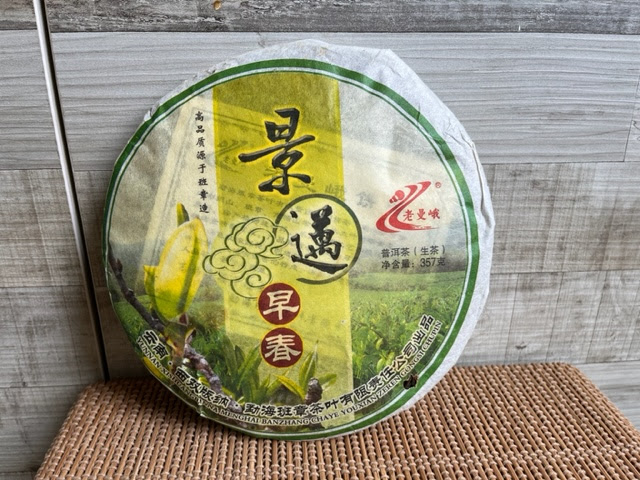
This 2011 Lao Man Er tea factory pu erh cake is one such tea. Made from a blend of banzhang, bulang and nannuo old trees, the 'force' is strong with this tea. I could feel the qi and starting getting sweaty from the 2nd infusion. There is nothing sweet about this tea. A woody aroma with bitter medicinal herbs dominate the flavour.  It is slightly mellow and not astringent. Mouthwatering with a nice long aftertaste.  Good for 10-12 strong infusions. Quite addictive. A strong tea.   

Today, many new pu erh tea sold in shops are 'ready' and 'can drink now'. The pu erh processing is different now. Maybe it's the timing of the 'kill green' (frying), or the manual drying of the tea in ovens instead of sun drying.  I am old fashion and prefer the traditional style of pu erh. My entire collection is from the traditional type. The tea would easily last me a lifetime.   I am thirsty. Time for tea.  

Saturday, September 23, 2023

2018 Taetea Brothers Ripe Pu erh 100g


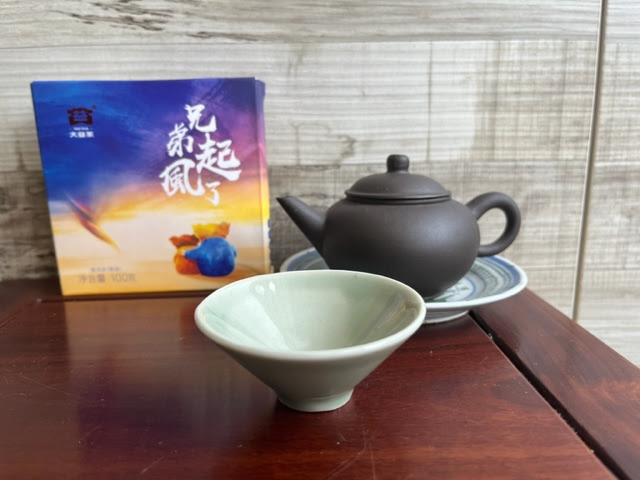
This is a Taetea (aka Dayi) special edition Shou (ripe) pu erh cake that was produced in 2018.  Packaged and sold in 100g brick, this tea is nicely boxed and is called 'brothers together'.  The Penang tea shop translated this tea as 'Being with you through the wind' which I felt was a little inaccurate. 

More importantly is the tea itself. This tea brews strong and I recommend you use less tea leaves than usual for this brew. This tea is aromatic when brewed. I detected toasted sweet breads as well as the signature Dayi aroma. There is hardly any sweetness in the aftertaste.  There is also a fermentation scent in this tea even though this 'brothers' tea is already 5 years old. Perhaps this tea would be better if it was stored away for another few more years. 

Overall, this tea is decent; strong and able to brew up to a dozen good infusions. The tea in the teacup (see pix) is in its 10th infusion.  

Saturday, September 9, 2023

Xiang Mu Hai Chien Liang Cha


This is Xiang Mu Hai tea factory's Chien Liang cha. This is a black tea. Black tea produced in Henan, China were traditionally compressed in to 'log' like sizes, wrapped in bamboo, stored in a cloth bag before they are sold to the public. Such log sizes can vary in weight from 1 kg to more than 30 kg. These logs are kept in shops or homes standing proudly while they age away. From what I gathered from black tea drinkers, these tea are normally allowed to age for more than 10 years before these logs are cut to smaller slices. 

What Xiang Mu Hai tea factory did was to produce these logs and proceeded to cut them to slices before these slices are individually  packed and sold to the retail market. 

This Chien Liang cha is the factory's premium product called Fu Yong Chien Liang chan literally from Fu Yong (hibiscus) mountain. Sold as a 600g slice, this tea is very aromatic with a floral fragrance that lived up to the floral name of this tea. Noticed there is some 'jin hua' (golden flowers) in the tea leaves.  The compression of this tea slice is light.  I noted there are more leaves than stems in this tea.   

This Chien Liang cha is produced yearly and I have the 2020 version.  When I brewed up this tea, the perfumed fragrance is enhanced by a lightly sweet aftertaste.  Good for 6-8 infusions. A delicious tea session.