Tuesday, May 27, 2014

Yunnan Trip - My Ripe Tea Purchase


I only purchased 1 kg of ripe pu erh tea during my trip to Yunnan.  This is it.  4 bricks of 2008 Fuhai ripe tea.  I was told that this tea was made with similar materials from the 2007 Fuhai large leaf pu erh cake (link) which I had liked very much.

This brick was stored in Kunming and the climate there was less humid than Singapore.  As a result, this Kunming storage brick tasted somewhat suppressed and lack the punch of ripe pu erh tea that I am used too.  However, breaking up this brick, putting the tea in my tea caddy and only started brewing this tea after a couple of weeks did made drinking this tea a very pleasant experience.  Yes, it did taste similar to the 2007 Fuhai cake which I liked.  Nice woody aroma with a hint of floral notes.  I must remember to get more of this tea in my next visit.

But I digressed.  In my last blog, I mentioned the phenomenal prices of raw pu erh while I was in Yunnan.  Yes, I had noticed that certain new pu erh tea was gaining popularity and the higher prices that accompanied these tea.  Right now, raw pu erh teas from Lao Ban Zhang and Bing Dao are 'pu erh of the day'.  Prices of these tea are pretty phenomenal, to me anyway.  Prices of these tea are now commanding a few thousand RMB per kilo...which means a regular size cake made from these areas may cost close to US$200 retail.  

Let me share my thoughts on why these tea cost so much.  I believe there is a new group of tea drinkers/collectors that has came steadily into the Chinese Tea market.  This group is made up of local Chinese, but they are financially affluent and enjoys 'conspicuous' consumption.  They buy branded products and usually associate price with quality.  When they drink or want to buy Chinese tea, they would usually demand the 'best' or the most expensive to demonstrate their purchasing power.  As a result, Lao Ban Zhang and Bingdao pu erh teas have seen their prices rise because of this new demand.  Yiwu pu erh is starting to jump up in prices as well.  Tea dealers in China, who had taken advantage of this demand had benefitted as well.  While I was in Kunming, I noticed many tea dealers now drive expensive European cars and had even able to open more shops and upgrade their standard of living.  However, I would like to warn serious Chinese tea drinkers that you must know your tea if you want to buy these high end tea.....meaning....that its impossible that every tea shop has pure Banzhang or Bingdao tea - it could be a blend of teas inside your cake.  Caveat Emptor.  Buy your Chinese tea from a reputable teashop.

Tuesday, May 20, 2014

Yunnan Trip - My 16kg Souvenir


My Silkair flight to Kunming, Yunnan had allowed me up to 30kg of check-in luggage allowance.  While in Yunnan, I gave serious thoughts of what stuff I wanted to buy and carry back to Singapore.  Prices of pu erh tea especially for the new raw pu erh was astoundingly high (I will talk about tea prices  in a later blog), so I settled for this tea serving set and some tea. 

This 'stone on wood' set weighed a hefty 16 kg (35 lbs) when I placed the box at the airport check-in counters.  You will observe from the pictures that this tea table came in its original wooden box which helped protect the tea set on its flight home. The 2 main items were the stone slab  and the wooden board.  A plastic tube and pump (like those mini hand pump you used to blow off dust on a camera lens) was also included in the box.  Setting up this set was easy.

I was 'wowed' by this set.  It looked elegant.  I felt this set had incorporated the 'stone on wood' concept but was made to look simple and appealing to the eye.  

And...my family actually liked it.


Tuesday, May 13, 2014

Yunnan Trip - Xiaguan Tea Factory


I was in Yunnan last month and I was at the Xiaguan Tea Factory in Dali, Yunnan. 

Xiaguan Tea Factory is one the oldest pu erh tea factories in China.  It continues to produce quality pu erh and is today one of the biggest producers of pu erh tea in China.

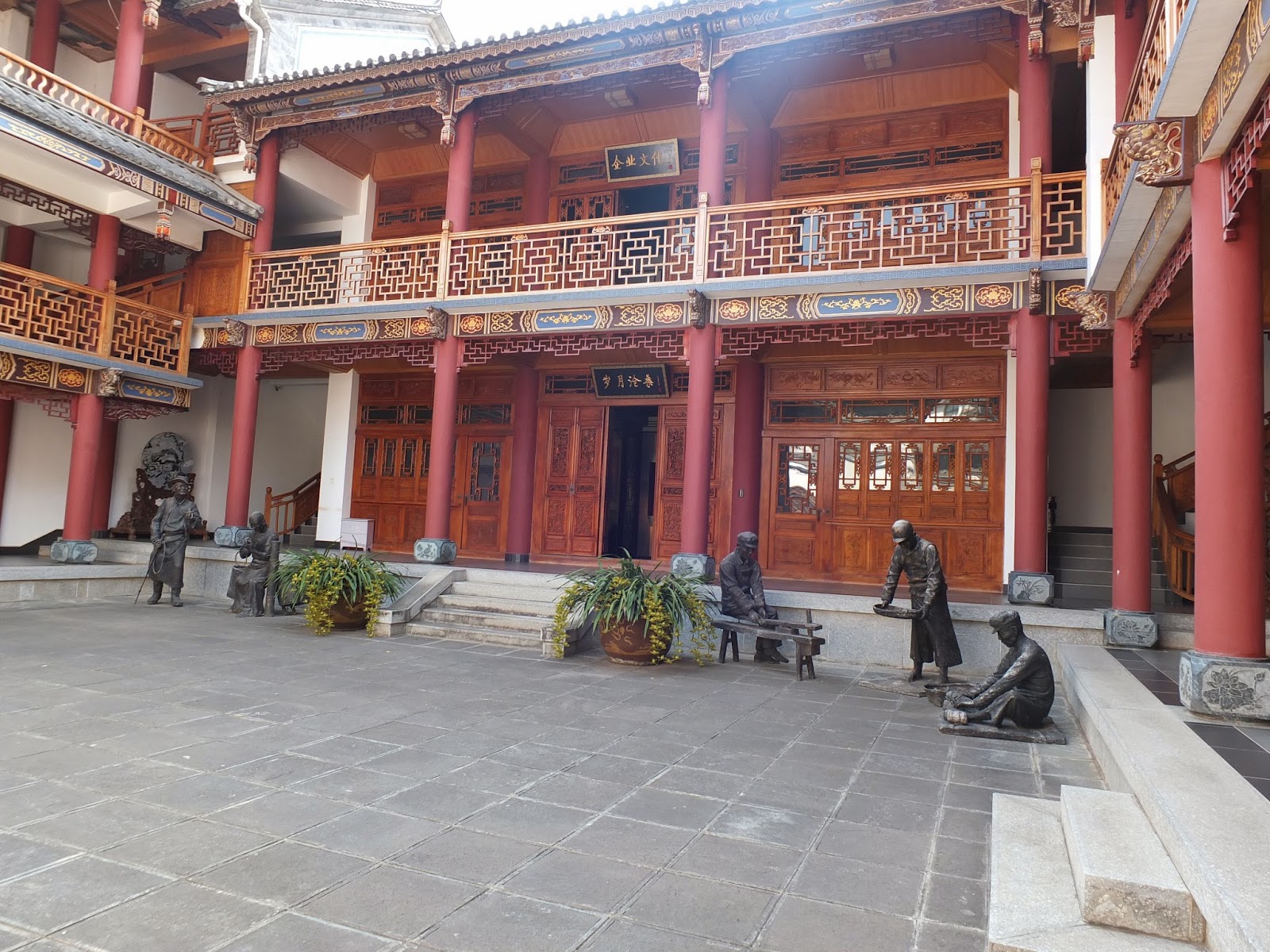
I arrived at the factory late in the evening and had the opportunity to visit their showroom.  This 'showroom' is actually a beautifully refurbished Chinese 3 storey house that came with a huge courtyard.  There were many rooms that highlighted the various milestones of Xiaguan Tea factory.  There was the trophy and awards room, scroll room, tea room, history and even a tea tasting room.  Simply fascinating.

Saturday, May 10, 2014

"Tea For Everyone" Seminar


I could not believe it.  Our local newspaper carried out an ad informing that there would be a Chinese tea seminar on 29 March 2014 and it was open to the public and it was free of charge.  Registration was easy; just scan the QR code on the ad, and you are brought to the web link to reserve a seat for the seminar.  

This "Tea For Everyone" seminar was organized by Wee Kim Wee Centre, Singapore Management University and they invited 3 speakers to speak at this 1.5 hr seminar.  This seminar was in Mandarin and I was surprised that the lecture theatre was 'full house' for this talk.

There were 3 speakers in this tea talk.  Mr Wang Jianrong, the 1st speaker, is the vice president of Hangzhou Longjing Tea Culture Research Association and a member of China museum management special committee.  Mr Wang, in his presentation, dealt with Chinese tea history.  He also mentioned in passing that yixing clay teapots were not suitable for green teas and these teapots were more suited for roasted ones instead. 

The 2nd speaker, Mr Ho Chien hailed from Taiwan and operates the Taiwan Tea Culture Institute.  His presentation deals with the tea drinking in everyday life. He believed that drinking Chinese tea not only has health benefits but allows the drinker to 'de-stress' while enjoying a cup of tea.  

The last speaker, Mr Lee Chee Keong, operates LiuXiang Teacraft in Singapore.  He spoke on Chinese tea in Singapore and he hoped to continue to share his knowledge and passion on Chinese tea in Singapore and abroad.  


Saturday, April 5, 2014

2008 Haiwan Lao Tong Zhi 908 Ripe Pu erh Cake


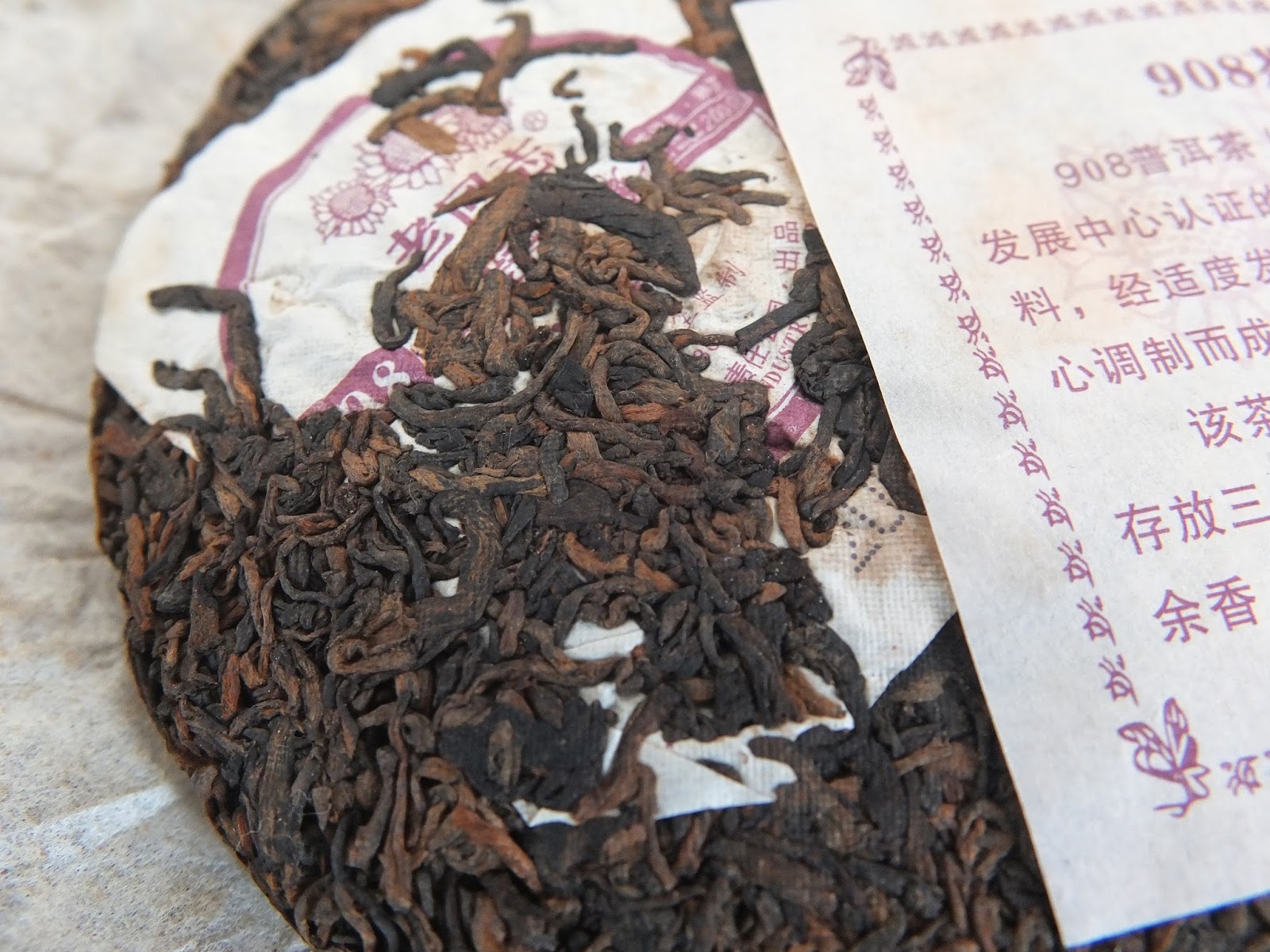
I recently opened up a tong of 2008 Haiwan Lao Tong Zhi 908 ripe pu erh tea cakes.  This paper wrapped tong comprises of 5 cakes each cake weighing 200g.  It a small tong when compared to the regular bamboo wrapped tong of 7 cakes (about 357g per cake).  Well I had noticed since 2008, there have been creative efforts made by pu erh tea factories to make their 'carton' of tea more affordable.  Some factories had reduced a carton of tea that normally has 6 tongs to a smaller carton of 4 tongs.  Or.....even pressed smaller cakes like this 908 recipe of 200g per cake and pack 5 cakes in a tong.  So when you are buying a carton of tea for storage or investment, find out the packing specifications before you agree to the price.  

Haiwan introduced this 908 ripe pu erh cake recipe in 2008.  It has now became popular with tea drinkers and this 908 tea had been produced yearly ever since.  Warning! - this cake for whatever reasons brew very fast and strong.  I brew my ripe pu erh tea normally on the strong side but for this pu erh,  I had to reduce up to 40% of my regular amount to have a good session of this tea.  I do not know why this tea brews so fast and strong.  I suspect this 908 blend has a mix of old ripe pu erh tea inside.  The information sheet enclosed within the cake did advise that storing the tea for more than 3 years would make the tea more flavorful.  No doubt about that.

Brewing this tea makes for a pleasant tea session.  A nice scent of dried fruits like berries and dates with a mild sweet after taste (a couple of minutes after drinking a cup of tea) was to me the highlight of this tea.  And....it is a very inexpensive tea to add to your tea collection.

Sunday, March 30, 2014

Tea News - Wales


The following article is well written by Laura Conner entitled "We won't serve you hot water without a tea bag in it" -Bizarre stance of train staff".  This article appeared in http://www.walesonline.co.uk/news/wales-news/we-wont-serve-you-hot-6732393 on Feb 21, 2014.


A commuter says she was refused a cup of hot water 'on health and safety grounds' and that the water would have to have a tea bag in it

Commuting can be stressful at the best of times – but one worker claims she was refused a morning cup of tea on her train due to “health and safety reasons”.

Kelly Davies, 35, of Penarth, asked the First Great Western catering assistant from Cardiff to Bournemouth on Tuesday morning if she could have a cup of hot water – but she says she was told she would have to drink it with a tea bag for “health and safety reasons”.

“The woman at the trolley said I would have to pay the full price of a cup of tea for the hot water – £1.90 – and said I would have to drink it with a tea bag,” said Kelly, a PR manager.

“I refused to believe it because it was just so ridiculous. I said, ‘No it can’t be?’ And then she refused to serve me completely.”

Kelly wanted the hot water to have with her own decaf tea bag that she had brought with her. The train did not have decaf tea bags for sale.

“I was even willing to pay the £1.90 for the water,” she said.

But Kelly’s main concern now isn’t that she was deprived of her morning cuppa.

“What has bothered me more is how head office have dealt with it and how they weren’t willing to answer my questions properly,” said Kelly, who got into a Twitter row with the train company about the incident she jokingly dubbed “hot water-gate”.

Staff manning the First Great Western Twitter account said the issue was “just an unfortunate reality of our wider auditing requirements” and told Kelly she would have to email the company with her complaint.

But Kelly responded by tweeting: “No, I want you to take responsibility. Why make me do more stuff? You can feed this back. It’s your company.”

A spokesperson at First Great Western said: “Health and safety has nothing to do with it and we should have been more honest with the customer.


“While we are more than happy to provide free hot water for medicinal purposes or to warm baby food, we don’t provide hot water for customers to make their own tea on board our trains.”


Saturday, March 22, 2014

Fang Yuan Brand Tea Ware


"Fang Yuan Pai",  which literally means square circle brand is considered a milestone period for Chinese tea ware.  This brand of tea ware was produced during the communist period, primarily around the 1960s through to the early 90s.

China during these 30 odd years, did export many its products overseas.  In my part of the world, it was common to purchase, inexpensively, China-made products.  Stationary, kitchenware, garments, canned and dried foods, medicine and even tea and tea ware were available for purchase. In fact, department stores called emporiums selling only China made products were opened for business.  Yue Hwa Department stores in Hong Kong and Singapore are still operating today.  For Singapore readers, there is also an old Chinese emporium (called Overseas Emporium) on the 1st floor of People's Park Complex in Chinatown.  The China made products were not considered expensive and were very popular with the locals.  

Tea and tea ware were one of the products exported by China.  "Sea Dyke" brand of oolong teas was one example. Their lao chong shui hsien was in high demand and is very popular even today (see link).  Porcelain and clay tea ware were also easily available.  These tea ware were actually used and there was no real value (no one thinks that they will be become collectibles and be expensive) in keeping such tea ware as an investment.  

Fang Yuan brand tea ware today are now famous and sought after by Chinese tea ware collectors.  As mentioned, this was a milestone period as it serves as a reference point of Chinese Yixing clay that was used during these 30 years.  This meant that when collectors are talking about yixing clay teapots made during these times, they will usually talk about Fang Yuan brand Yixing clay teapots.  These teapots when new came in its own paper box and a brand sticker is usually affixed to the side of the tea ware  I had purchased a couple of such teapots and I will talk about them in a later blog.

The 1st pix above shows a  European-styled teacup and plate and 2 tea caddies.  Note the white porcelain encased in the interior of the teacup and caddies.  The 3rd pix shows a 'trophy' shaped tea caddy while the 5th pix shows a peach-shape tea caddy with a bat perched on the top of the peach.  

I believed these tea ware I had purchased were made in the late 80s/early 90s.  The quality of the workmanship was a bit 'rough on the edges' but my collector friends told me they were made of pure yixing clay.  I am a proud owner of these tea ware.