Sunday, December 21, 2014
Malaysia Tea Expo December 2014
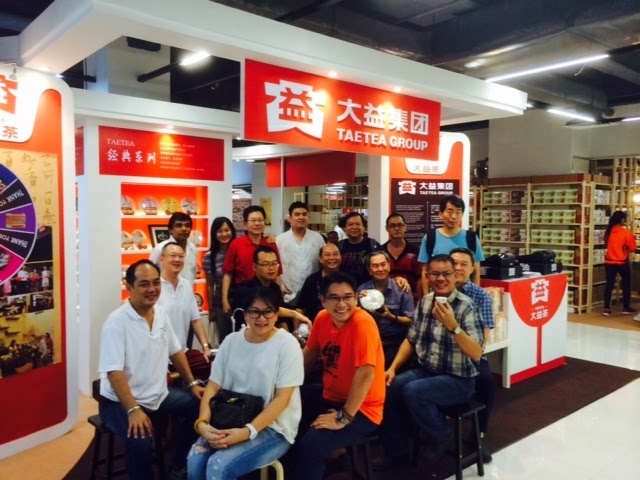
I was at the tea expo in Kuala Lumpur, Malaysia over the weekend. This tea expo was held at Viva Home Mall. I wanted to refill my stash of liu bao tea and wanted to see what oolong the tea expo had to offer.
It was interesting that this tea expo had most of the stalls promoting pu erh tea than other teas like oolong or liu bao. Pu erh tea here takes centre stage as many Malaysians do drink and invest in pu erh. Investment here would mean that tea collectors would purchase pu erh in quantities, like buying them in cartons and storing these tea for a few years and reselling these tea when the prices have increased. Taetea (Dayi) brand is an investment favorite among tea collectors.
The highlight of this year's tea expo, to me, was the 2014 Dayi 40th anniversary "Malaysia-China collaboration" pu erh tea cake (pix 4&5). This pu erh tea cake's recipe is created from feedback of the Malaysian tea drinking community. This cake is smokey. And yes....most of this tea will not be drank but stored away as an investment item.
Pix 3 is the pu erh tea group I meet when I am in Kuala Lumpur. I am especially grateful to James Ong (pix 3 , standing in a red polo shirt) who spent considerable time with me updating me on the trends in pu erh tea as well as the new finds of pu erh tea that met the high drinking standards of this tea group. Thank you very much, James!
While I was disappointed that I did not get to purchase any older oolongs at the fair, I did buy some pu erh tea and a couple of teapots (more in my later blogs). A memorable trip and I was most happy when I am drinking tea with my Kuala Lumpur tea group.
Tuesday, December 9, 2014
My New Tea Table From Keramikstudio
Yes....I got myself another tea table. Readers will know that I had already a few tea brewing tables and this new addition arrived last week. Why so many tea tables? I don't know....maybe open a tea nightclub or something.
This large circular tea table measured 18 inches or 46cm across and arrived well packed in a huge carton box all the way from Czech Republic. Made by Keramikstudio and owned by Petr Novak and his partner Miroslava Randova, this handcrafted woodfired tea table simply captured my imagination that I was willing to shell out US$205 (inclusive of air freight) to get it.
This tea table is made up of 3 parts. The table top, a large deep circular bowl and a removable trivet. The trivet as you will notice, is a 3 legged support that when placed in the tea bowl, will hold up and support the table top. The trivet also act to keep the table top dry during a tea brewing session. This tea table set is very sturdy and heavy as well. The only setback is pouring out the discarded tea after a tea session, which needed me to be more careful and deliberate due to the weight of the tea bowl.
I purchased this tea table for a number of reasons. One is that the design is simple but elegant. These guys from Kermikstudio had captured the essence of a Chinese tea brewing table, that is being simple and functional. I just add in a teapot and a few cups to start a tea session. Nothing fancy...just simple. And...this tea table is made by a European couple all the way in Czech Republic. It is my opinion that this table is nicer than most fancy tea tables I had seen in the tea markets in China.
Time for a group photograph of my family of tea tables.
Monday, December 1, 2014
Tieh Kuan Yin - Butterfly Brand
I was told that this tinned Butterfly brand Tieh Kuan Yin (aka tgy) was considered as one of the expensive tinned tgy. Retailing for about $30 or US$25, you get 250g worth of tgy sealed in a aluminum foiled bag and packed in a tall metal tin to ensure the tea leaves do not get broken till sold.
I am starting to drink and explore the world of oolong and went recently on an oolong shopping day. I am unable to resuscitate my wallet after my oolong purchase. I can understand now why serious oolong drinkers use small teapots to brew their tea.....its so darn expensive!
I used smaller teapots to brew my oolongs. For pu erh...I use 150-220ml teapots, but for oolongs I use about 100ml sized teapots. I find that brewing oolong in in a smaller teapot is ideal for me as I drink oolong on the strong side and 6 good infusions of oolong is enough oomph for a tea session. I normally fill about 1/4 of the teapot with oolong and let the hot water infuse for about 15-20 seconds before pouring out the tea. When I end my tea session, the teapot will looked stuffed full of the hydrated tea leaves....literally to the brim.
Back to this tgy. This tea is a medium roast tea, but on the heavier side. If I use a scale to measure the roast levels of a tea....0-35 is light, 35-70 is medium while 70+ is heavy roast. I would rate this tea with roast levels at 65 - 68. This tea exhibits a nice floral bouquet aroma with a mild hint of a sweet finish. I personally prefer the heavier roasted tgy but overall impressions of this medium roast tea are very good. This tea makes a very nice chilled tgy too. One more thing...if you are using a yixing teapot to brew your oolong, use the teapot only for oolongs as the aroma does sometimes linger for some time after washing the teapot and may affect your tea session is you use the same teapot for other non oolong tea.
Friday, November 21, 2014
The Thirsty Games
Welcome to the first edition of The Thirsty Games!
Yes, this contest pits teacup against teacup. The rules are simple - no violence and no breaking of teacups. In fact, no contact whatsoever among teacups. Teacups will not be judged by their physical appearance, size or color but they will be assessed by the tea. This simply meant that tea will be poured into the teacups and the tea will be judged cup by cup. Yes, expert tea drinkers worldwide had attested that the material of a teacup can affect the taste and aroma of the tea. I decide to take out a few of my teacups and see whether these teacups affect the tea or not.
I selected 4 cups for the Thirsty Games. I chose a 90s rice pattern porcelain cup (aka rice), a Jian or Temmoko(Japan) rabbit hair cup (aka rabbit), an old Japanese Bizen cup, made by Hisamoto (aka Bizen) and a Ru Yao crackled glazed cup (aka crack).
I had also chose 3 teas to be tested on the teacups. One ripe and raw pu erh as well as an heavy roasted oolong. I will use the 3rd infusion from each tea and pour out that infusion into the 4 cups.
I observed that rice and crack teacups held heat best. The tea felt warmer in these two teacups while the tea in bizen and rabbit was cooler. Perhaps this was due to the wider mouths of bizen and rabbit teacups. However, I liked the wider mouths as bizen and rabbit teacups seem 'wrap or surround' my nose when I drink tea from these cups and the aroma seem to be more pronounced from these two teacups.
How about the taste of the tea in the teacups. I am not certain but there are very subtle differences. Ripe pu erh tea was outstanding in bizen, while raw tasted subdued in crack. Oolong was nice in rice and rabbit. I cannot be 100% certain and I would have to taste tea from these teacups on more occasions.
Overall, the Thirsty Games was a fun exercise. It makes my tea session more experimental and interesting. Till the next Thirsty Games. May the teacups be forever increasing in your collection!
Sunday, November 16, 2014
Puerh Tea Bag - Butterfly Brand
I received a call from a local tea drinker friend. He had read my blog about Bao Ding brand of pu erh tea bags (link). My friend loves his cup of pu erh and like me, will take along pu erh tea bags when he is traveling or attending long meetings. He called me to say that the Butterfly brand of pu erh teabags are better than mine.
It is very interesting to compare notes among fellow tea drinkers. There will be different opinions on a tea even if it was served to a group of tea drinkers at a tea session. I believed a cup of tea will appeal differently to tea drinkers and sometimes life experiences do affect the perception of a tea. The tea may be a reminder of a pleasant, happy or memorable experience.
Back to the teabags. Both of us had not tried each other's teabag so I fixed a lunch appointment in town to meet and to go on a tea bag buying exercise.
The Butterfly brand of pu erh tea is a nice clean stored ripe pu erh. The other Bao Ding brand is more of a Hong Kong stored style of pu erh, which has a slight humid, 'old cupboard' aroma. These teabags brew best with boiling hot water. Both teabags are inexpensive at about US$2 for a box of 25 teabags.
Now, my friend and I are happier with our pu erh tea bags. We equipped ourselves with both of these teabags when we are on the road.
Sunday, November 9, 2014
Tea Caddy
Storage of tea is an important aspect in your hobby of drinking and collecting Chinese tea. This will enable your tea to store well and in some teas to aged properly.
General rules of tea storage are pretty simple. Tea should be kept away from odours, light and humidity. The dried Chinese tea leaves in our collection absorbs smells and moisture easily and in many instances may damage your tea and make brewing the tea unpleasant or less desirable.
Green teas like Longjing must be stored very well. They would lose their green lustre as well as a reduction in taste and aroma if not stored well. I recommend that if you enjoy green teas, buy enough to last you 6 months to a year. This way, you will get fresh tea yearly. And....pack your tea in food grade bags and store them in smaller containers, Refrigerate your tea if possible. Freezing the tea is another good option. This will keep the green tea as fresh as possible. The smaller containers would also extend the 'shelf life' as only small amount of tea leaves are exposed to room temperature at any one time.
You will also realized that oolongs are also sold in different degrees of roast. You have the very light roast like Taiwanese high mountain oolongs and Fukien Tie Kuan Yin that range from very light to very heavy roasted levels. For the light roasted oolongs, the tea is fresh tasting and the tea leaves look vibrant green and supple. These teas, I would recommend be 'ziplocked' and refrigerated to keep the freshness. As for the high roasted oolongs, ziplocking the tea and storing the tea in a tea caddy would suffice. Some of my friends insist storing their heavy roasted oolongs in a more 'airtight' container.
A tea caddy is a a container to store your tea. The pix you see are part of my tea caddy collection. The 1st 2 pix are actually called mizusashi. They are actually used in Japanese tea ceremonies as water storage containers. Water is poured out from these mizusashi to refill the water kettle. The mizusashi I owned are about 6 inches high and 5 inches wide, suitable to store a broken up regular sized pu erh cake. The 1st pix is Seto ware while the 2nd pix is Kyo ware, which refers to the style and I believe, the Japanese provinces where these containers were made. Yes, the ceramic lid just rests on the container which means these improvised tea caddies are not air tight. I fold a pu erh wrapper and place the folded wrapper on top of my tea cakes when I store pu erh in these tea caddies.
Pix 3 and 4 are pix of a ceramic steamer used in Chinese cooking. Such steamers are used to cook soup and herbal tonics. They are very pretty and I converted one of these steamers into a tea caddy.
The 5th pix is a English made tea caddy. The lid came with an inner rubber- like lining that will keep the tea caddy 'reasonably airtight'.
The 6th pix is a paper box tea caddy. When you make a purchase of tea at a Chinese tea shop, you will most of the time have your tea packed in such a container. These containers are good and can be reused many times.
The teas stored in my tea caddies are liu bao, pu erh and high roasted oolongs.
You will also see many types of tea caddies that are made from different materials and come in an assortment of shapes. As long as your container serve to store your tea well, it is a great tea caddy.
Sunday, November 2, 2014
2006 Haiwan Mavin Imperial Tea Brick
I gave a loud hoot when I discovered this carton of 2006 Haiwan Imperial Brick ripe pu erh in my tea stash. This carton held 10 of these bricks of 100g each. I had already consumed one brick a few years back (link).
You will notice that Haiwan had dated this tea on the bottom flap of the box. As far as I know, this imperial brick came out in 2006 and 2007. Why the label 'Mavin' on the box? I wish I know the answer but Haiwan distributors I know in Guangzhou and Malaysia do not know this 'Mavin' mystery too.
Anyway, I would like to apologize to my readers that the last pix of the brick was a copy of the brick I blogged in 2010. I had forgotten to take a pix of the pu erh brick when I opened it 2 weeks ago.
This tea brick is highly compressed. Moreover, this brick uses the 'gong ting' grade leaves. These leaves are supposedly to be of better grade of pu erh and they are made of small tea leaves with some shades of amber. I liked the complex aromas and flavors of this brew. I could detect nice scented wood and a nice mix of dried herbs flavor in the tea. I finished this brick within 2 weeks.
One drawback of the tea is that the smaller tea leaves used in this tea clogged up my filter in my teapot while brewing and I do get a much stronger tea as a result. (I find that washing the teapot after the brewing session and putting the teapot in the hot sun will naturally dislodge the clogged leaves in the filter). Perhaps using less tea leaves will be a good idea as well.
Subscribe to:
Posts (Atom)


